
Attention Sole Proprietors: Are You Exempt from the SRC Certificate When Transporting Your Own Goods?
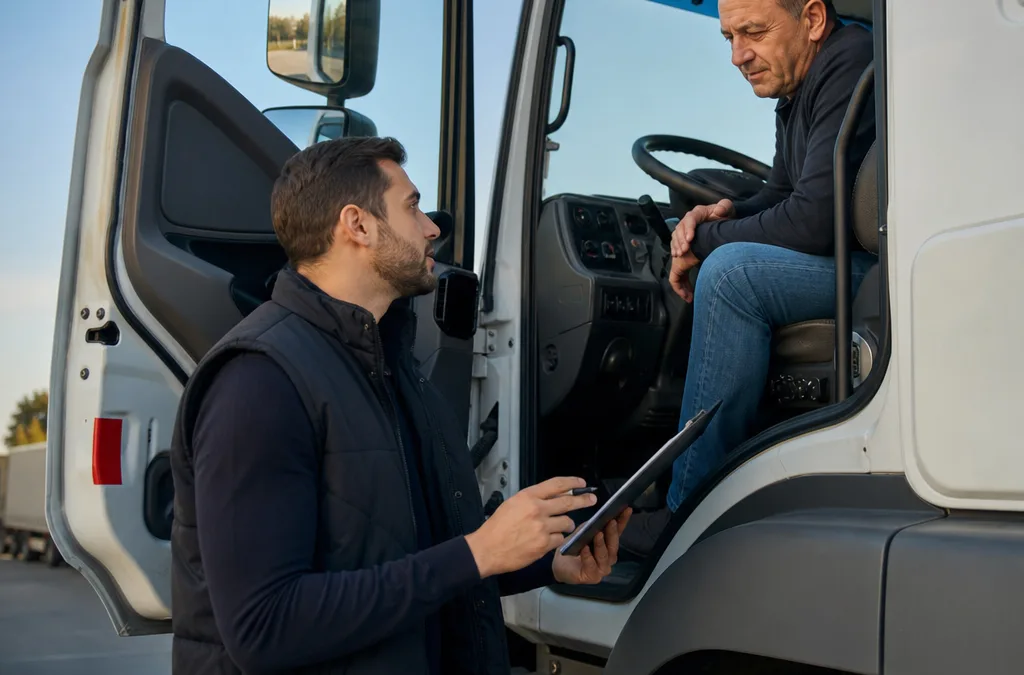
With the growth of e-commerce and boutique production, many tradesmen and sole proprietors have started transporting their orders to courier branches in their own vehicles. Your daily routine is set: carefully prepare the products, pack them, issue the invoice, load them into your vehicle's trunk, and head to the courier branch...
While everything is going great, you get pulled over at a traffic stop, and the officer asks you that famous question: "Do you have your driver's SRC certificate and psychotechnical report?"
At that moment, the famous defense many tradesmen have heard through the grapevine comes to mind: "Officer, I'm not a hauler! I have a sole proprietorship, and I'm just taking the goods I produce or sell to the courier. Isn't there an exemption for those who transport their own goods?"
Unfortunately, this defense will most likely end with a hefty fine ticket being handed to you. But why? Is the "own goods transport exemption" a complete lie? Let's break down this confusing myth step-by-step in the clearest way possible.
Where Does the Confusion Come From? (The Big Misconception)
There's only one reason our tradesmen fall into the "I'm exempt" misconception: confusing two different documents in the legislation: the K Certificate and the SRC Certificate.
The Road Transport Regulation distinguishes between professional haulers (those who transport others' goods for a fee) and businesses that only transport their own company's goods. However, this distinction exempts you from the K1 Authorization Certificate, which has strict requirements, NOT from the SRC certificate that drivers must obtain.
In essence, the law says;
*"You are not a professional hauler, so I don't require the difficult and expensive K1 Certificate that those who transport others' goods get. However, you are putting commercial goods on the road, so I'm making an exception for you and requiring you to obtain the K2 Certificate (Starred K2 for light commercial vehicles), which is cheaper and has easier conditions, specifically for those who transport their own goods."*
In summary: The "transporting own goods" exemption applies to the K Certificate obtained for your company vehicle, not to the SRC certificate obtained by the driver!
The Need for an SRC is Hidden in Your Vehicle Registration!
Whether you need an SRC certificate when going to the courier depends less on the 3-5 boxes you're carrying and more on the "Vehicle Class/Type" stated in your vehicle's registration. There are two different scenarios:
1. If Your Vehicle is Registered as an "Automobile" (Passenger Car) 🎉
If you are taking your packages to the branch in the trunk of your personal vehicle—such as a sedan, hatchback, or station wagon—that is registered as an "Automobile", these vehicles are not classified as commercial freight vehicles. In this case, you are NOT REQUIRED to have a K2 certificate, SRC, or Psychotechnical report. (You should, however, always have the invoice/e-waybill for the packages with you in case of a potential tax inspection).
2. If Your Vehicle is Registered as a "Van" or "Panel Van" ⚠️ (Attention!)
This is the trap that 90% of tradesmen fall into. If you use a high-volume light commercial vehicle for your business, such as a Fiat Doblo, Ford Transit, Renault Kangoo, VW Caddy, or Fiorino, these vehicles are usually registered as a "Van" (N1 Class).
If your vehicle is classified as a van and it contains a commercial product belonging to your sole proprietorship (your invoiced goods to be shipped), you are considered to be conducting a commercial transport activity in the eyes of the law. In this case, the person behind the wheel (even if it's the business owner transporting their own goods) is legally required to have the following documents:
SRC 4 Certificate (Domestic Goods and Cargo Transport Certificate)
Psychotechnical Report
The "But My Registration Says 'Private'!" Defense
Another point that tradesmen with van-registered vehicles rely on is the phrase "Purpose of Use: Private Freight Transport" in the registration.
The word "Private" indicates that you cannot transport a random person's goods and issue them a freight invoice with this vehicle. However, the moment you place your own commercial cargo, registered to your tax plate, inside that private van, the action itself becomes a "commercial" activity.
At a checkpoint, the moment the officer sees the cargo boxes in the back and the company invoice in your hand, they will issue separate fines for both the lack of a K2 certificate (to the company/vehicle owner) and the lack of an SRC 4 (to the driver).
In Summary: What Should Tradesmen Do to Avoid Fines?
Excuses like "The courier branch is just two streets away, I'll take the back roads" or "It's only 2 boxes, what kind of commerce is that?" are unfortunately not valid with Transport and Traffic authorities. If you are transporting a commercial item, the distance or the number of boxes is irrelevant.
If you have a sole proprietorship and are transporting your own products to the courier in a vehicle registered as a "Van/Panel Van", you should take the following 3 steps immediately to avoid surprise fines:
For the Vehicle: Obtain a K2 (Starred K2 for vehicles under 3.5 tons) Authorization Certificate by issuing a vehicle card in your company's name via e-Devlet (or from Regional Directorates of Transport).
For the Driver (SRC): If you are the one driving the vehicle to the courier, enroll yourself in a course without delay to obtain an SRC 4 Certificate. If an employee drives, ensure they get one.
For the Driver (Health): Obtain your Ministry of Health-approved Psychotechnical Report by taking the minimum 1-hour test that measures driver reflexes and attention, and have it registered in your e-Devlet system.
Don't fall for the "I'm carrying my own goods, so I'm exempt" urban legend and sacrifice your hard-earned money to unnecessary and heavy administrative fines. May your documents be in order, your roads clear, and your sales plentiful!
Related guides
Official sources
For questions, you can visit the SRC Guide contact page or write to us via WhatsApp.